
List of all cryptocurrencies
An altcoin is any cryptocurrency that is not Bitcoin. The word “altcoin” is short for “alternative coin”, and is commonly used by cryptocurrency investors and traders to refer to all coins other than Bitcoin el royale casino. Thousands of altcoins have been created so far following Bitcoin’s launch in 2009.
The very first cryptocurrency was Bitcoin. Since it is open source, it is possible for other people to use the majority of the code, make a few changes and then launch their own separate currency. Many people have done exactly this. Some of these coins are very similar to Bitcoin, with just one or two amended features (such as Litecoin), while others are very different, with varying models of security, issuance and governance. However, they all share the same moniker — every coin issued after Bitcoin is considered to be an altcoin.
Each of our coin data pages has a graph that shows both the current and historic price information for the coin or token. Normally, the graph starts at the launch of the asset, but it is possible to select specific to and from dates to customize the chart to your own needs. These charts and their information are free to visitors of our website. The most experienced and professional traders often choose to use the best crypto API on the market. Our API enables millions of calls to track current prices and to also investigate historic prices and is used by some of the largest crypto exchanges and financial institutions in the world. CoinMarketCap also provides data about the most successful traders for you to monitor. We also provide data about the latest trending cryptos and trending DEX pairs.
Do all cryptocurrencies use blockchain
When it comes to types of consensus mechanisms, Proof of Work (PoW) and Proof of Stake (PoS) steal the limelight. PoW is the brawny guy at the gym, flexing computational muscle to solve complex puzzles and validate transactions.
IOTA replaced the traditional blockchain-based distributed ledger with a so-called directed acyclic graph (DAG). The IOTA protocol operates with a DAG-based consensus algorithm which the IOTA team have termed Tangle. Though still in development, Tangle is eventually intended to work as a distributed ledger similar to blockchains, but with a unique twist. A trader who makes a transaction must confirm two random previous transactions. Each of these two will have validated two other transactions before, and so on. The end result is not that transactions are grouped into blocks and stored in a blockchain. Rather, it is a stream of individual transactions entangled together.
On some blockchains, transactions can be completed and considered secure in minutes. This is particularly useful for cross-border trades, which usually take much longer because of time zone issues and the fact that all parties must confirm payment processing.
Payments-focused cryptocurrency XRP has surpassed BNB token to become the world’s four-largest digital asset by market cap. As of writing, XRP boasted a market cap of $41.44 billion, with the tally surging 66% in the past 24 hours alone, according to CoinDesk data. While BNB’s market value rose 6.5% to $40.57 billion.
It can be used to record and track the ownership of a photographic image or a piece of music or a patent for a new gadget. It can even be used to track the provenance of food – from farm to plate – and medical supplies, including vaccines.
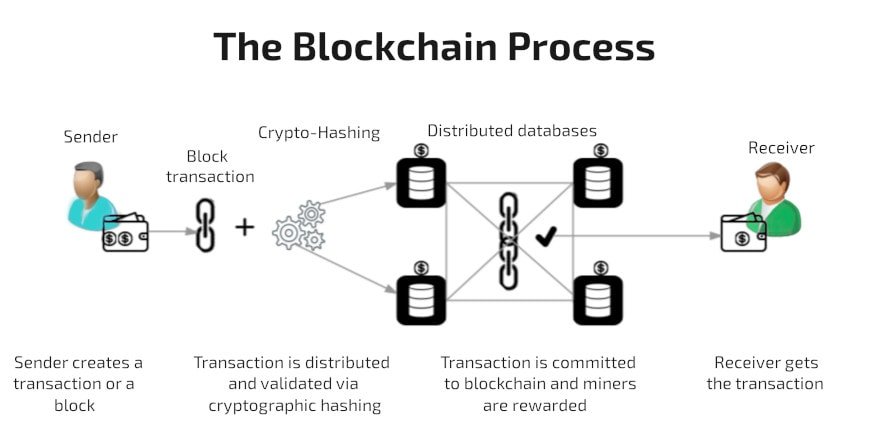
Are all cryptocurrencies based on blockchain
These blocks of encrypted data are permanently “chained” to one another, and transactions are recorded sequentially and indefinitely, creating a perfect audit history that allows visibility into past versions of the blockchain.
Because of the decentralized nature of the Bitcoin blockchain, all transactions can be transparently viewed by downloading and inspecting them or by using blockchain explorers that allow anyone to see transactions occurring live. Each node has its own copy of the chain that gets updated as fresh blocks are confirmed and added. This means that if you wanted to, you could track a bitcoin wherever it goes.
Some companies experimenting with blockchain include Walmart, Pfizer, AIG, Siemens, and Unilever, among others. For example, IBM has created its Food Trust blockchain to trace the journey that food products take to get to their locations.
Perhaps no industry stands to benefit from integrating blockchain into its business operations more than personal banking. Financial institutions only operate during business hours, usually five days a week. That means if you try to deposit a check on Friday at 6 p.m., you will likely have to wait until Monday morning to see the money in your account.
Using blockchain in this way would make votes nearly impossible to tamper with. The blockchain protocol would also maintain transparency in the electoral process, reducing the personnel needed to conduct an election and providing officials with nearly instant results. This would eliminate the need for recounts or any real concern that fraud might threaten the election.
Currently, tens of thousands of projects are looking to implement blockchains in various ways to help society other than just recording transactions—for example, as a way to vote securely in democratic elections.